The White-Knuckle Trap
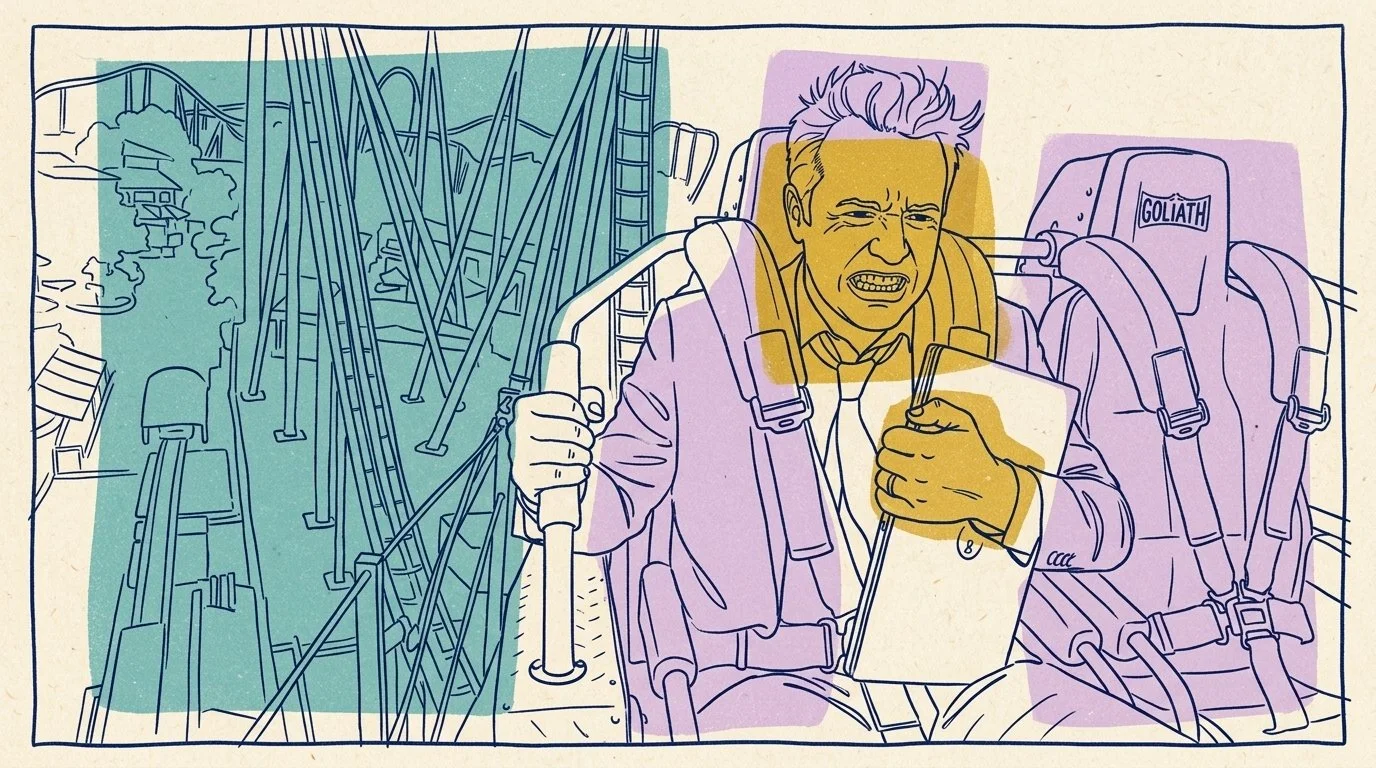
Every guy knows the move. You are sitting in your car before a high-stakes presentation, chest tight, heart hammering against your ribs. Your move? Double down. Grit your teeth, lock your jaw, tell yourself to stop being a soft idiot, and walk into the room with a death grip on your clipboard.
You survive the meeting, the adrenaline drains, and you count it as a win.
Except it isn't. You survived by holding your breath until the fear passed, and that all but guarantees the next meeting will feel just as brutal.
The Flawed Mechanics of "Powering Through"
When anxiety hits, most men run the same playbook:
The Override: Bracing your body, forcing your way through the event, and treating any hint of fear as an enemy to be crushed.
The Internal Beatdown: Running a harsh inner commentary ("What's wrong with you? Pull it together"), on the assumption that enough self-contempt will eventually whip you into shape.
I have watched a lot of capable men run these two on a loop, and almost every one of them was sure he was the only one doing it.
It works in the short term, which is what makes it a trap. Because you survived by white-knuckling, your brain registers a false lesson: I only survived because I braced. You never give yourself the chance to discover the reality: the spike of adrenaline would have peaked and dissolved on its own, without you burning out your nervous system to fight it. Gritting your teeth doesn't shrink anxiety. It feeds it.
The Second Arrow
There is an old Buddhist parable about two arrows. The first arrow is the pain life throws at you, in this case the sudden spike of physical anxiety. It hurts, but it is just physiological noise.
The second arrow is the one you shoot into yourself: the shame, the internal abuse, the conviction that feeling anxious makes you weak. The first arrow is unavoidable. The second is self-inflicted, and it is usually the one that does the real damage. It is also the part I spend most of my time on in the room, because it is the part people do not realise they are adding.
White-knuckling feels like the strong move. Over the long run, it is one of the weakest strategies going: expensive, exhausting, and isolating, and it leaves you convinced you are the only guy in the room secretly losing his mind.
Upgrading the Playbook
Dropping the death grip does not make you soft. It swaps a strategy that burns you out for one that works.
1. Treat anxiety like weather, not an enemy. Stop trying to crush the physical symptoms. When your heart starts racing, acknowledge it: okay, adrenaline is spiking. Don't fight the alarm. Let the noise sit in the background while you focus on the task in front of you. Adrenaline dies down faster when it has nothing to fight.
2. Master graded exposure (build capacity small and often). You don't start recovery by jumping headfirst into an ice bath. You start with thirty seconds of cold water at the end of a hot shower, and build tolerance over time. The same rule applies to your nervous system. Take low-stakes risks first: speak up early in a quick morning check-in, or drop the physical bracing in a low-pressure meeting. Small, consistent reps rewire the brain. Shock therapy only reinforces the threat.
3. Fire the internal dictator. Self-criticism pretends to be motivation. It is really just bad telemetry. Blaming yourself for a nervous system response is like beating your car dashboard because the low-fuel light came on. Drop the second arrow.
4. Test the dropped grip. The real flex is walking towards medium-stakes situations, with your chest just a little tight, refusing to brace or berate yourself, and doing the job anyway. That is how you teach your brain you can handle anxiety; you dont need to get anxious about the anxiety.
Real nerve is not forcing your way through an unnecessary storm; it is having the composure to pace yourself, unhook your hands from the wheel and realise the car is not crashing.