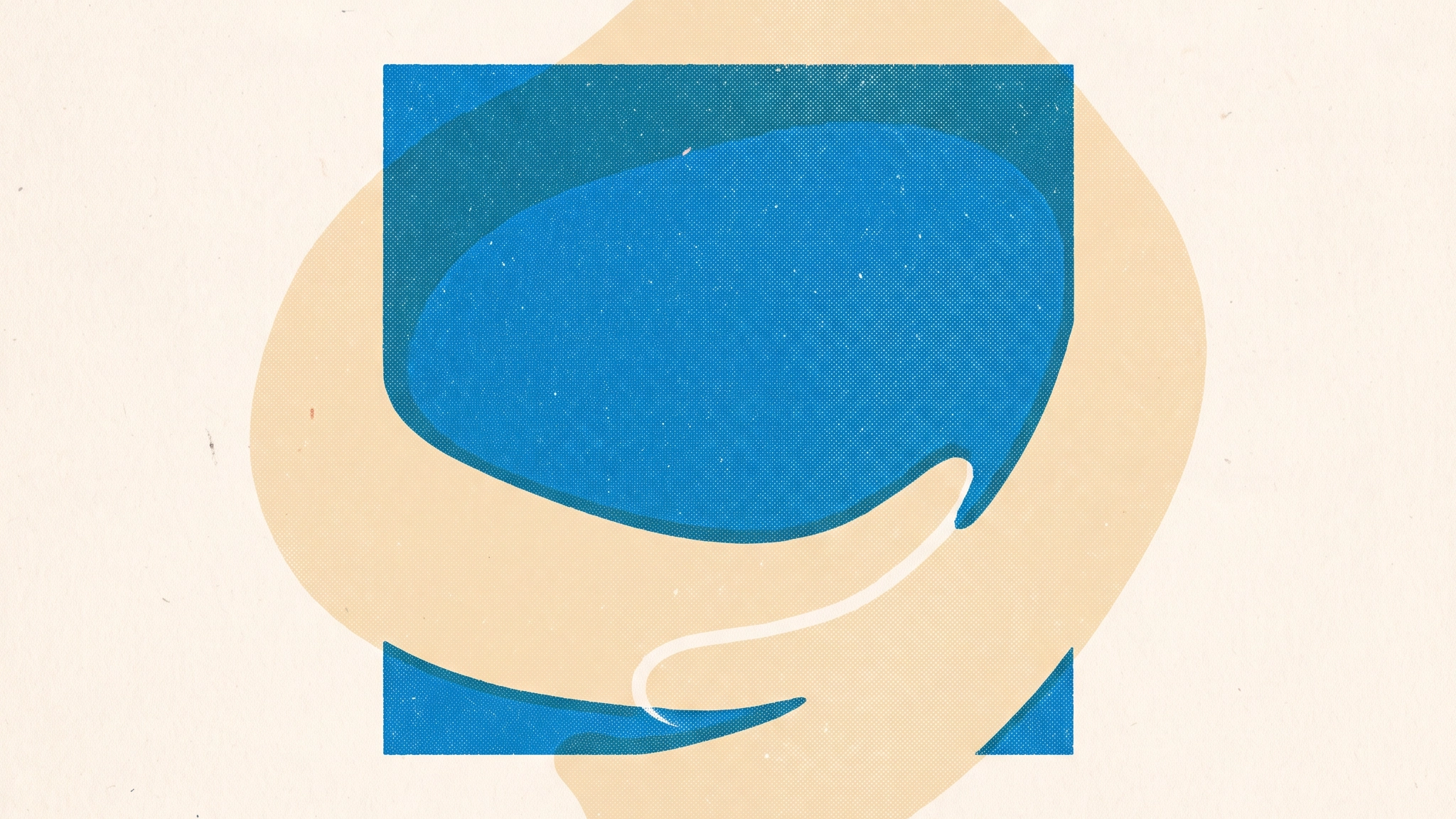
There’s a new name going round for something people have done for years. Job hugging: staying in a role we’ve outgrown, holding on tight because letting go feels dangerous. We stay exactly where we are, neither leaving nor climbing, hands wrapped around the desk we already have.
It gets framed as sensible. The market is uncertain, so we stay. But when I hear someone describe it in the room, sensible is rarely the feeling underneath. The feeling underneath is often fear, and the job hug is what we do with it.
Of course, not everyone who stays is avoiding something. Sometimes a job is a decent job in a bad labour market, and staying put is the wise call. What I am describing is the version where the reason we give for staying is not quite the reason underneath.
In therapy I look at behaviour through a simple lens. What do we want, what do we try, does it work, and what does it cost. It is worth running job hugging through the same four questions, because the answers are more revealing than the trend pieces suggest.
What we want. Relief from uncertainty. The thought is some version of, if I stay exactly where I am, nothing bad can happen to me. No rejection at interview. No being the new person who doesn’t know where anything is. No discovering that maybe I’m not as capable as I hoped. Staying put promises to keep all of that at arm’s length.
Almost no one I see calls it fear. They call it loyalty, or being realistic, or the wrong time to move. The words are sensible. The fear is doing its work underneath them.
What we try. We grip. We stop looking at other roles, and sometimes stop letting ourselves imagine them. Some of us over-deliver, becoming so useful that leaving would feel like abandonment. Others of us go the other way and shrink, keeping our heads down so no one questions whether we should still be there. And most of us tell ourselves a story that makes staying sound wise: I have put this many years in, I may as well see it through. That is the sunk cost fallacy at work: loyalty to the years already spent, when the only years we can actually use are the ones ahead. Different strategies, same function: reduce the risk of anything changing.
Whether it works. In the short term, yes. Every time we decide not to apply, not to ask, not to move, we feel a small drop in anxiety. Relief arrives on cue. Our brains file it away as proof that gripping the desk was the right call. This is how a safety behaviour survives. It pays out quickly, so we do it again.
The striking thing, sitting with someone, is how reasonable each separate decision to stay sounds. It is only when you line them up that the pattern shows.
Why it can last for years. This is how a job hug survives for years, sometimes decades. Low-level dissatisfaction is bearable. It is a grey feeling, the kind we can live around, so it never crosses the line that would force a decision. And we can carry grey for a very long time.
There is a strange twist in this. It is often when a job becomes intolerable that we are finally set free, because at that point staying is no longer something we can talk ourselves into. The mild version is the sticky one. You do not have to wait for it to get that bad before you let yourself move.
What it costs. The bill comes later, and it is larger than it looks.
First, the fear grows. Every time we avoid the thing we are afraid of, we teach ourselves that it was too dangerous to face. The imagined interview, the new team, the risk of not being good enough: none of it gets tested, so none of it gets smaller. What I notice in the room is that avoidance compounds. Each time we step around the thing we fear, it grows a little larger, and facing it later costs more than facing it now would have.
Second, we lose the evidence that we can cope. Growth is mostly a collection of moments where we did something uncertain and survived. Hug the job long enough and we stop collecting those moments. Self-trust runs down, and the running-down feels like more proof that staying was wise.
Third, there is the life we are not living while we wait for conditions to feel safe. They rarely do. Certainty is not a thing the world hands out before we act. It is something we build afterwards, by acting and seeing what happens.
One thing to try. You do not have to resign this afternoon. Safety behaviours do not need to be dropped all at once, and telling yourself you should quit tomorrow is just a fresh way to feel overwhelmed and stay put.
Try something smaller. Pick one thing you have been avoiding because it might not work out. Update the CV you have not touched. Ask about the project you assumed you weren’t ready for. Have one honest conversation about what you actually want. Then notice what happens to the fear afterwards. Usually it is smaller than the version that lived in your head.
You are allowed to want safety. Most of us do. The question worth sitting with is whether the thing you are gripping is keeping you safe, or just keeping you down.
Originally published on Medium: https://medium.com/@lisannecbt/job-hugging-is-the-new-quiet-quitting-8b11f29bb43c